Licensed, Bonded and InsuredWA License JEREMPL810QEAvailable 24/7
Licensed, Bonded and InsuredWA License JEREMPL810QEAvailable 24/7
No hot water? We will tell you honestly whether it can be repaired, or whether you are better off replacing it. Free estimates on all jobs.
Licensed, Bonded and Insured · WA License JEREMPL810QE · Owner Operated · Free Estimates on All Jobs · Financing Available
When a water heater fails, it rarely does it at a convenient time. You find out in the shower, or you find out because there is water across the utility room floor. Either way you need someone who will look at it, tell you what is actually wrong, and give you a straight answer about what it costs to put right.
Jeremy’s Plumbing is owner operated. Jeremy does the diagnosis himself, and you deal with the same person from the first call to the finished job. We would rather tell you a repair is not worth doing than sell you one that is not.
On a gas unit this is usually the pilot, thermocouple or gas control valve. On electric it is normally a failed element or thermostat. Both are repairs, not replacements.
Often a failed lower heating element, a broken dip tube, or sediment taking up space in the tank.
Usually a spent anode rod. Caught early this is inexpensive. Left alone the tank corrodes from the inside.
Sediment build-up on the bottom of the tank. A flush usually solves it and the unit runs more efficiently after.
If the leak is a fitting or valve, it is repairable. If the tank itself has gone, no repair will save it.
Thermocouple, gas valve, or a venting problem. All repairable.
Usually worth repairing: the unit is under about 8 years old, the tank is sound, and the fault is a component. Thermostat, heating element, thermocouple, gas valve, anode rod, dip tube or a leaking fitting.
Usually worth replacing: the tank itself is leaking, the unit is past roughly 10 to 12 years, or the repair cost is approaching a meaningful share of a new unit. A tank that has rusted through cannot be repaired.
We tell you which one you are in before the work starts, not after.
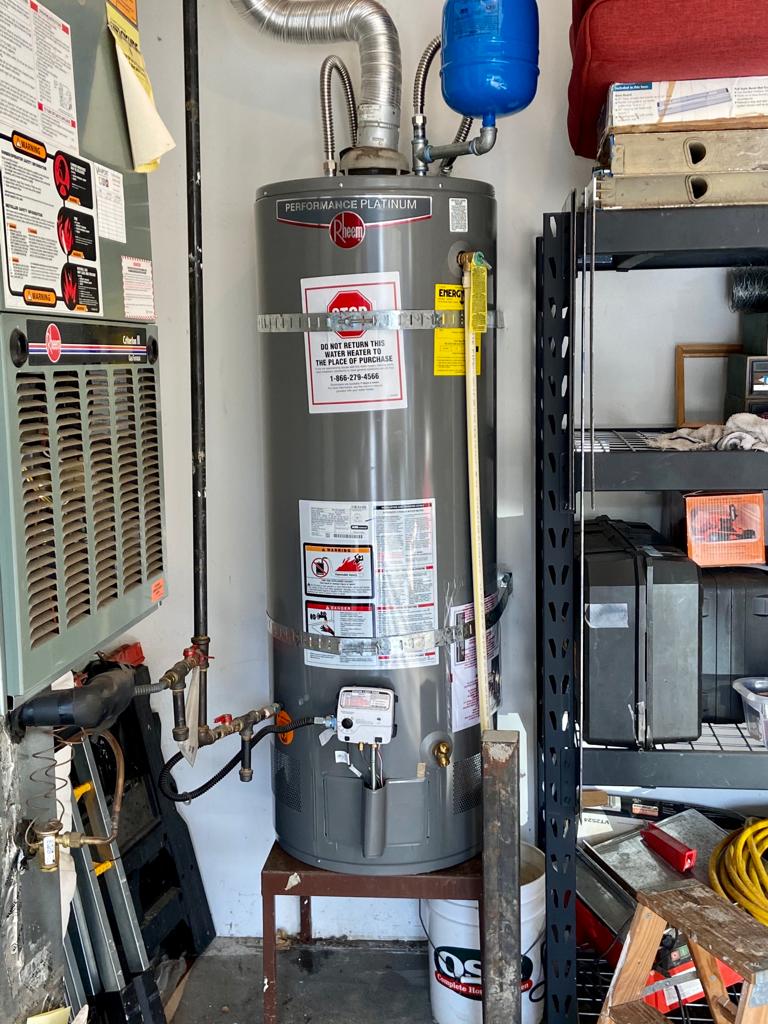
Burner, pilot, thermocouple, gas valve and venting.
Upper and lower elements, thermostats, high-limit reset.
Descaling, error codes, flow sensors, ignition and venting.
Compressor, fan, condensate drainage and control board.
Tell us what the unit is doing. Often we can narrow it down before we arrive.
A clear explanation of what failed and why.
Repair or replace, with the reasoning, before any work starts.
Same visit wherever the parts allow.
Hot water back, and your utility room the way we found it.
Vancouver · Salmon Creek · Hazel Dell · Orchards · Felida · Battle Ground · Brush Prairie · Ridgefield · Camas · Washougal
How long does a water heater last?
A conventional tank unit typically lasts 8 to 12 years. Tankless units often run longer with regular descaling. Past about 10 years we will usually talk to you about replacement rather than a repair that buys a few months.
My water heater is leaking. Can it be repaired?
It depends where the leak is. Fittings, valves and drain valves are usually repairable. A leak from the tank body itself is not: the tank has corroded through and needs replacing.
Why do I have no hot water?
On gas, usually the pilot, thermocouple or gas control valve. On electric, usually a failed element or thermostat. All of those are repairs rather than replacements.
Why is my hot water rusty?
Usually a spent anode rod, the sacrificial part that protects the tank from corrosion. Replacing it early is inexpensive and extends the life of the heater.
What is that rumbling noise from the tank?
Sediment on the bottom of the tank heating and moving. A flush usually solves it.
Do you charge for an estimate?
No. We give free estimates on all jobs.
Do you repair tankless water heaters?
Yes, including descaling, error codes, flow sensors, ignition and venting faults.
Do you warranty your work?
Yes. Water heater work carries a two year warranty on our labor, double the one year minimum we put on everything else we do. The unit and its parts carry the manufacturer’s own warranty, which varies by brand and model.
Which brands do you install?
For standard tank units, gas or electric, Bradford White is our standard. For tankless, we install Navien and Rinnai. For hybrid heat pump units, any brand you prefer. We have access to every major brand, so if you want something specific, ask and we will get it.
Do you offer financing?
Yes. We offer financing through Affirm. The invoice we send you carries an option to pay over time instead of all at once, and Affirm sets the terms. Useful when a repair or a replacement arrives unplanned, which is usually how they arrive.
Tell us what is going on and we will get back to you. Prefer to talk? Call or text (360) 949-2330.
Free estimates on all jobs. Licensed, bonded and insured. You deal with Jeremy, start to finish.